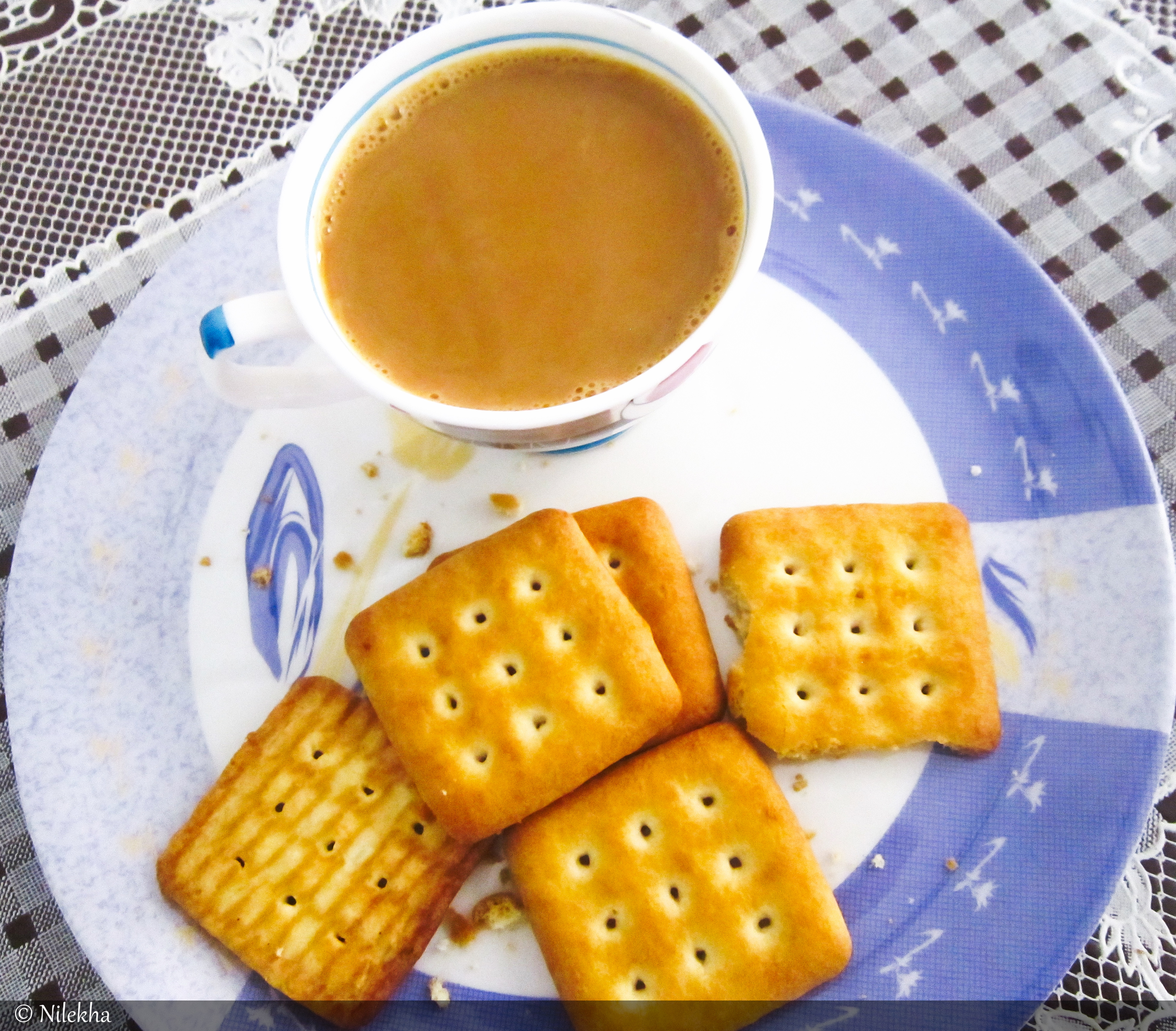
I have always associated early mornings with a particular aroma. A smell of boiling water with the addition of fresh ginger root & a delicate aroma of tea powder added to it. That was the smell that had truly awakened my senses, even when I was a kid. Like me, most of the Indians begin their morning with a sip of ‘Chai’ or as we call it ‘kadak chai’ (kadak literally means stiff & yes we use this adjective to describe a tea rather than a drink). In Pune city, it is affectionately called ‘Amrutatulya’ (like Ambrosia). Many Mumbaikars (people living in Mumbai) find respite in a hot cup of Masala Chai in pouring rains of Mumbai. Most of the world knows that “Chai” is an Indian tea. Well actually, Chai means tea in Hindi. Just as many people think that ‘Curry’ is a type of Indian gravy or sauce dish; rather than a genre of food-type containing many dishes; Chai is a general word used to describe any & many types of Indian tea concoctions right from Masala chai (tea infused with spices, which has sub-categories like Adrak ki chai: Ginger infused tea) to Chai Malai marke (tea with full cream).
According to Wikipedia the word Chai is derived from the Mandarin word ‘chá’. Many native Indian languages use variations of the same word like ‘Chaha’ (Marathi), Cā /Cha (Bengali) & (Gujrati), etc. Though recipes of Chai widely vary from region to region & even household to household; the basic concept of chai involves steeping of black tea in boiling water, the addition of milk & some form of sweetener (either sugar, honey, jaggery or other artificial sweeteners). Addition of spices like ginger, cardamom, cinnamon, clove, black peppercorns, nutmeg, etc. is optional & the combinations differ as per one’s choice. The addition of milk & spices was actually introduced by tea vendors of British ruled India as means to economize the drink, as tea at that time was quite expensive.
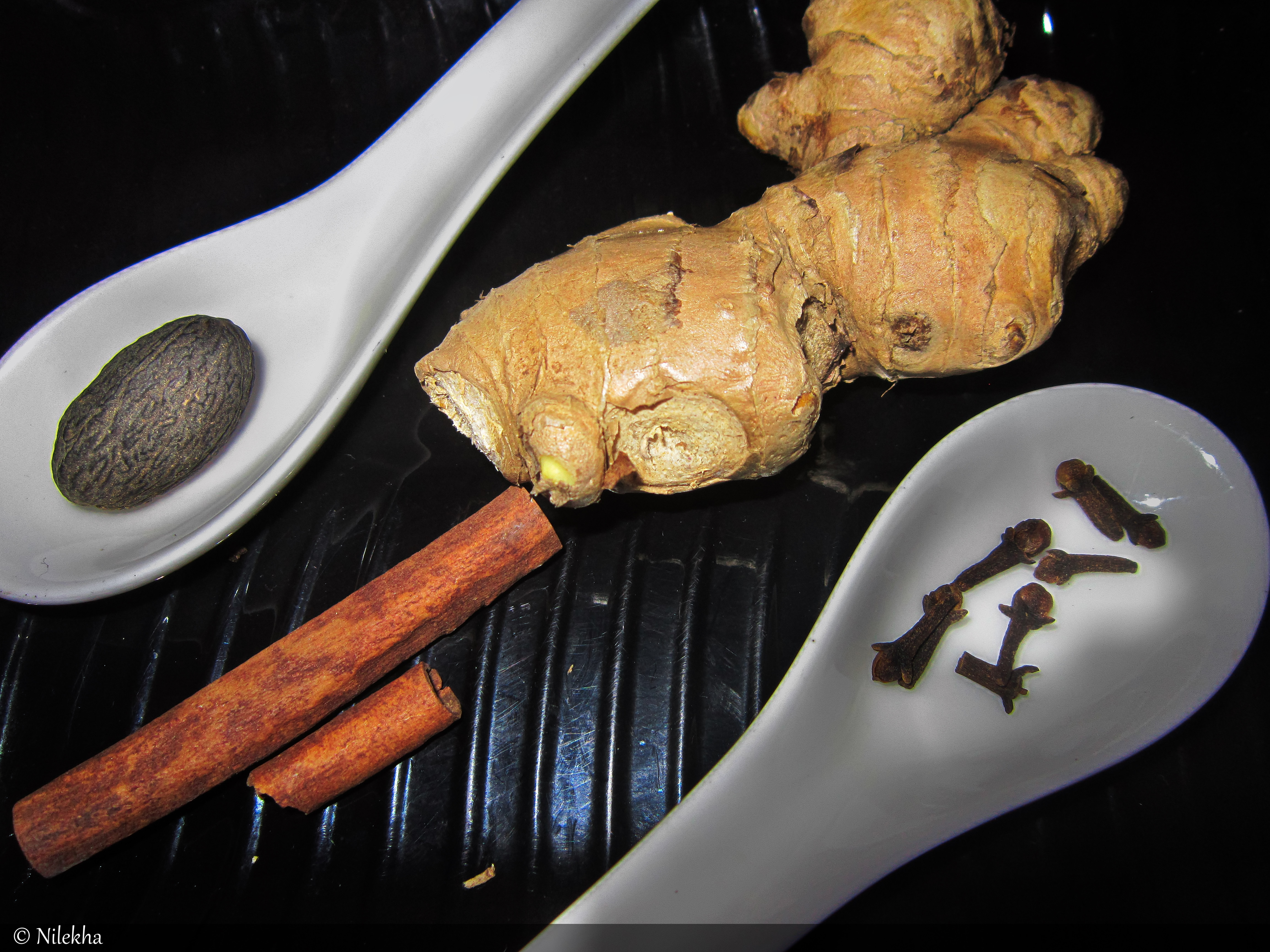
Black teas grown in Assam & Darjeeling are famous across India & are preferred over teas grown in other regions. CTC teas (crush, tear & curl teas in which teas are packed in the form of hard pellets) have become quite popular in place of traditional loose leaf teas. Although the traditional steeping of tea in a kettle with cosy, pouring of tea in a cup, addition of sugar lumps & milk is hardly the process followed for making regular chai; chai has its own charm. The delicate fruity/citrusy flavour of British Earl Grey is quite different from Indian strong chai though both have black tea as a base.
I was quite amazed when I came across Chai Tea Latte for the first time in the US. The name if translated literally means ‘tea-tea latte’. Chai Tea lattes that one comes across in different coffee & tea shops have different spices including star anise, vanilla, five spice or citrus flavoured additions, which are not the part of traditional chai. However, the popularity of ‘Chai Tea Lattes’ has grown tremendously (thanks to coffee shop chains like Starbucks). In India though, machine-made tea is generally frowned upon. Normal Indian population also does not like tea dipping bags. For us, tea is supposed to be freshly brewed each time & it should be made in the traditional Indian way. Although a number of coffee chain shops like Starbucks, Café Coffee Day, etc. are widely popular across India, tea essentially should be either home-made or thela-made (street-vendor made). The thele-valas or chai-valas (tea vendors) provide cutting (half a cup of tea), parcel (to go packs) & even chai-khari (Khari is a type of puff pastry, generally salty which is popularly served with tea).
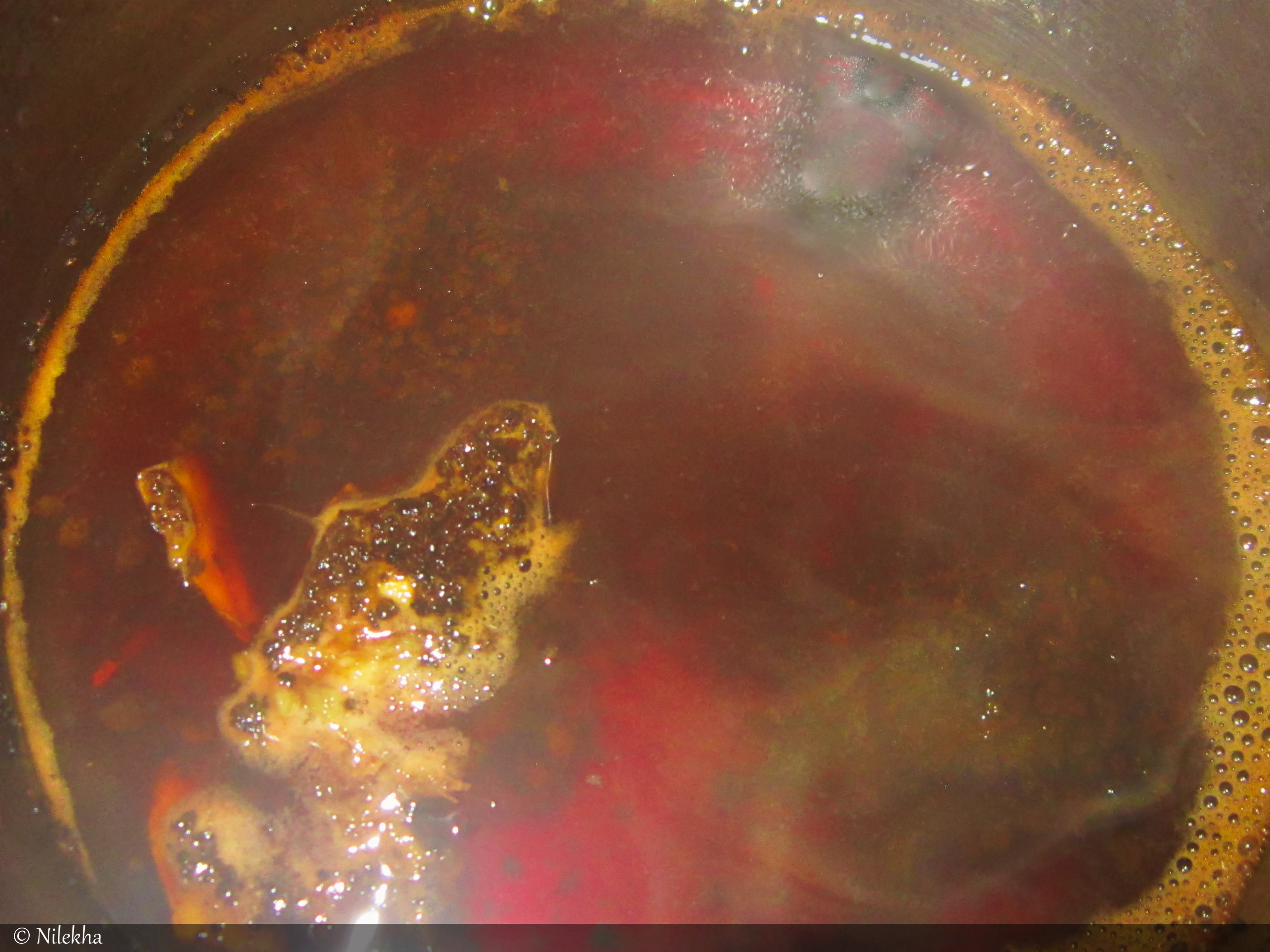
Here’s my version of Adrak ki Chai (Ginger infused Tea):
Ingredients:
- Water
- Sugar (granulated)
- Fresh ginger-root (either grated or crushed in mortar pestle)
- CTC tea/ Tea powder
- Milk
Method:
This method is purely followed in households, Chai made at Thele-valas is made in a bit different fashion:
1. Add water in a cooking pot & put it on the stove
2. Add sugar & crushed/grated ginger
3. Let the water come to the boil
4. Reduce the heat, add tea powder
5. Turn the heat off
6. Cover the pot with lid
7. Let the tea steep in the water for 2-3 minutes
8. Strain with the help of tea strainer
9. Add milk (milk should be hot or at least warm)
10. Serve with Khari/sweet-salty crackers

Shall we have a cup?
 Nile's Creations